FREE BUILDING
Let them build
Children who played with blocks, puzzles and board games most often scored higher on a spatial test.
See the study doodlebuild
WHAT THE RESEARCH SAYS
A pile of wooden blocks is quietly one of the best-studied toys there is.
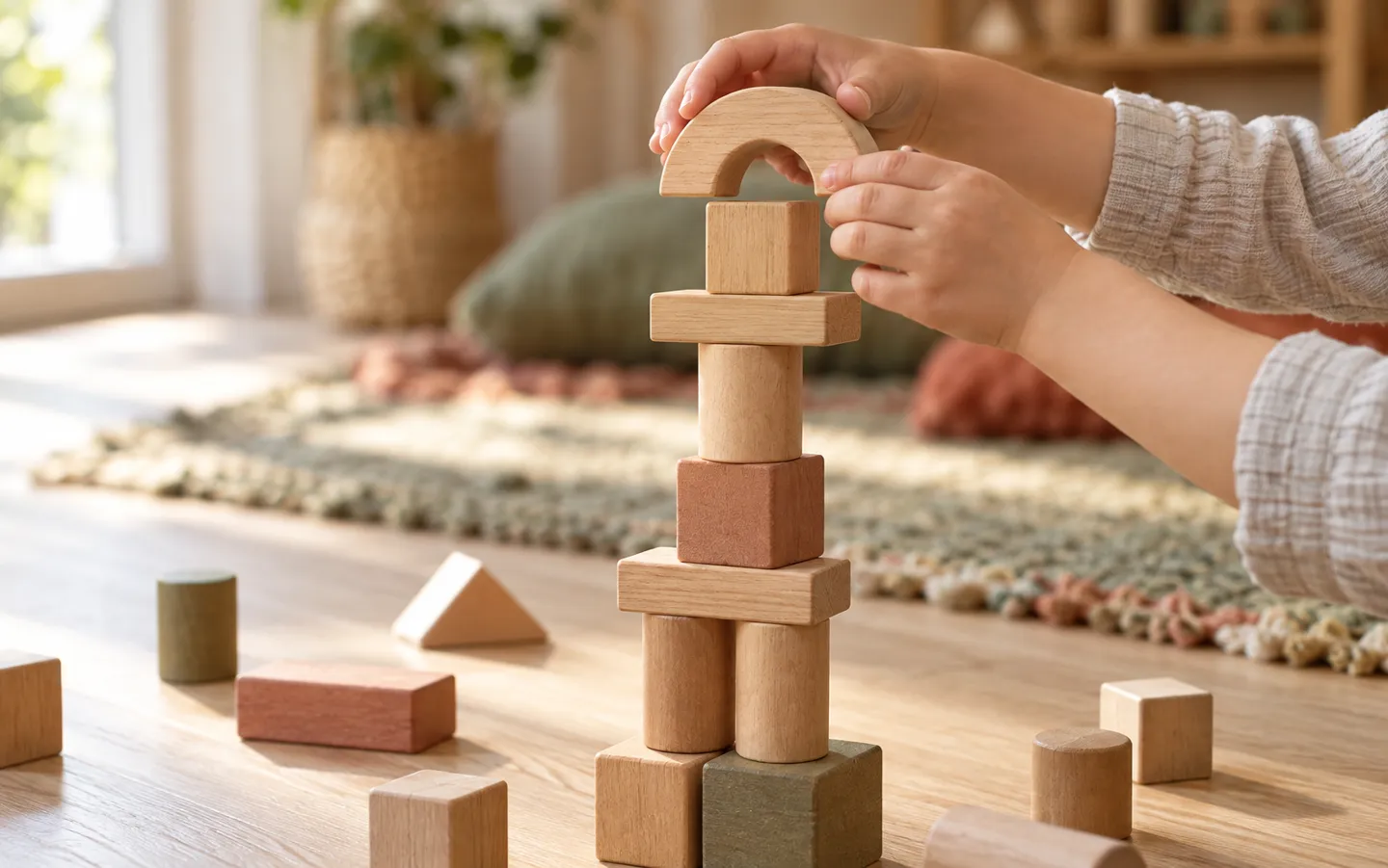
Children who build, and especially those who copy block designs, tend to have stronger spatial reasoning and early maths skills. The research is mostly about links rather than proof, but it points the same way. Here it is, in plain English.
Plain English, with the sources linked.
BUILD then talk
Find words to useTHE SHORT ANSWER
Spatial skill is linked to early maths,
and it improves with practice.
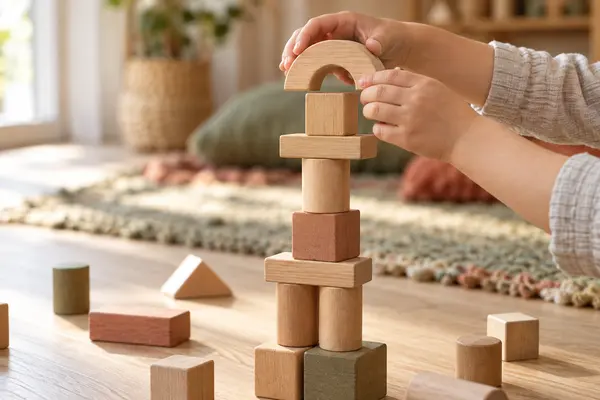
FREE BUILDING
Children who played with blocks, puzzles and board games most often scored higher on a spatial test.
See the studyCOPYING A MODEL
Three-year-olds who were better at copying block structures were also better at early maths.
Try it at homeSPATIAL WORDS
Words like above, below and between give children the language for space as they build.
Words to try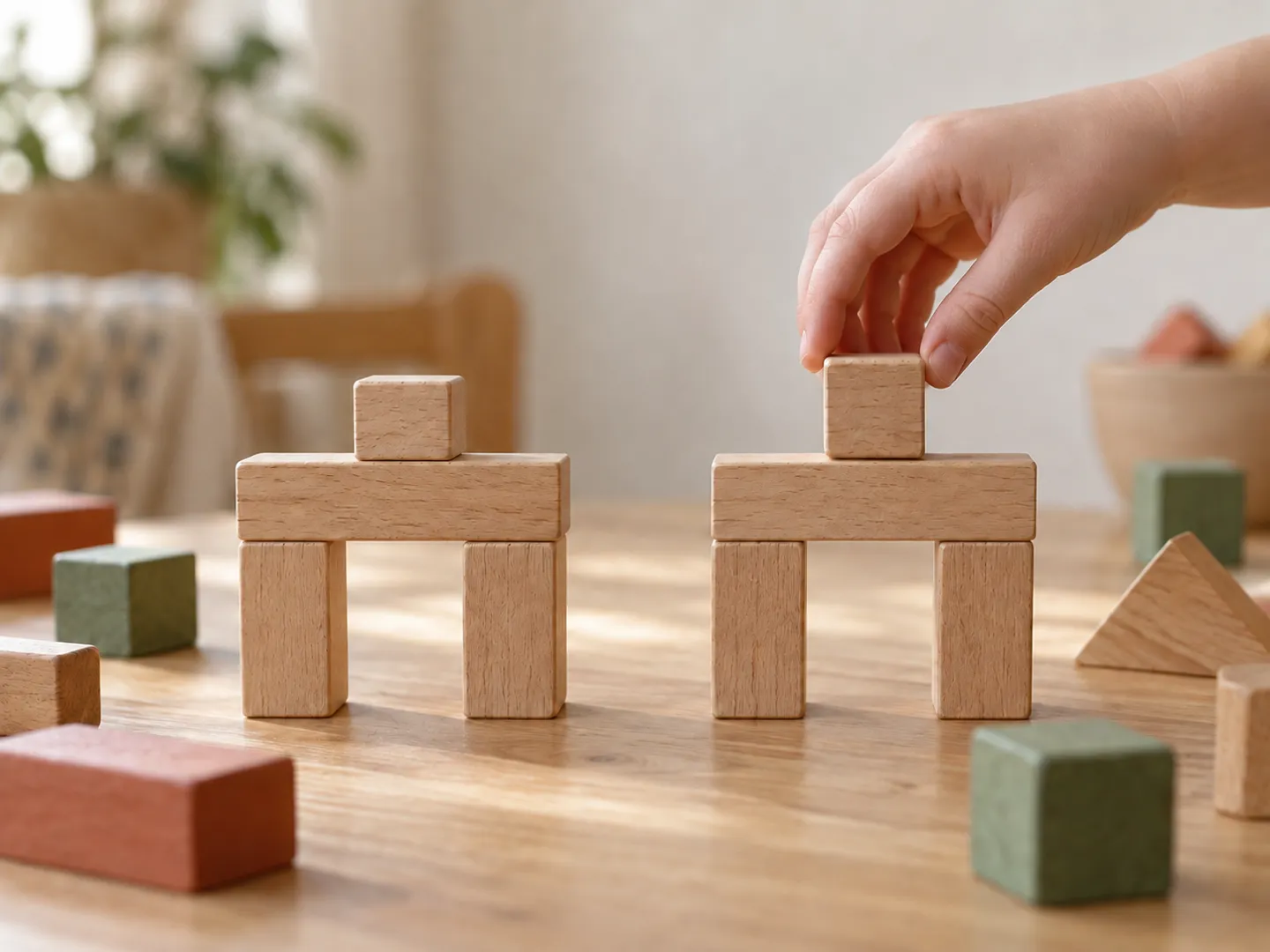
TRY IT AT HOME
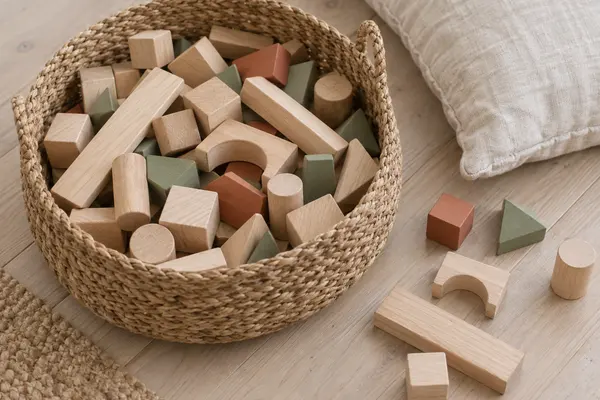
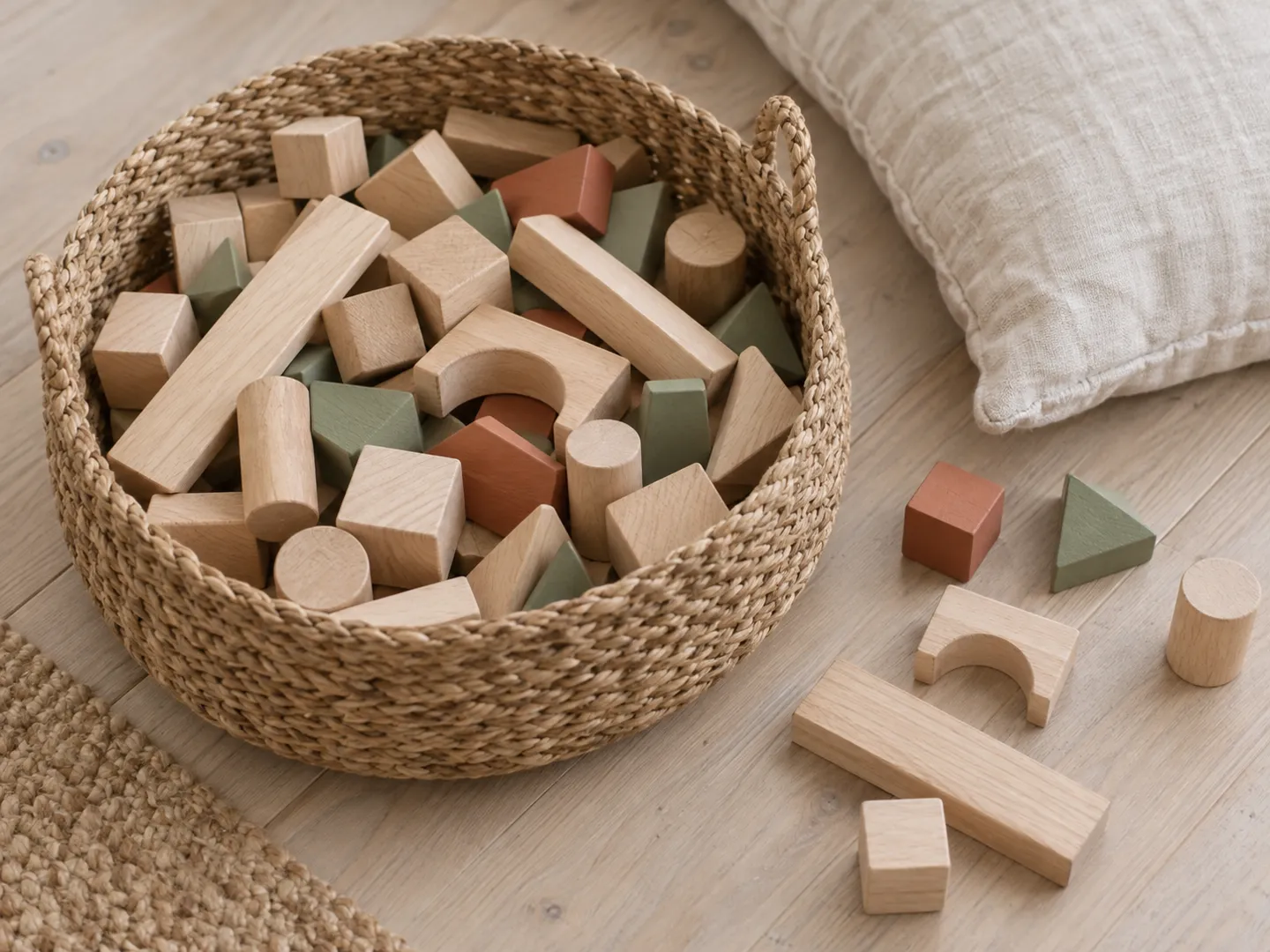
A basket on the floor gets used more than a box on a shelf. Plain blocks in a few shapes are plenty.
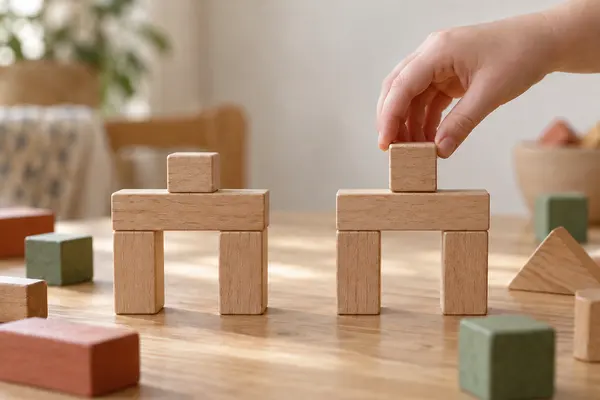
Make a small structure of three or four blocks and invite them to build the same thing next to it.
Use words like on top, under, beside and between as you play. Ask where a block should go rather than pointing.
The 2015 study counted puzzles and board games alongside blocks. Rotate them to keep things fresh.
TWO STUDIES WORTH KNOWING
Both studies found links between
building and thinking about space.
847 children
Children aged 4 to 7
Children who played with puzzles, blocks and board games more than six times a week scored higher on a block design test than children who played three to five times a week, or rarely. The authors note the link is correlational.
PLAY AT HOME · 2015
102 children
Three-year-olds copying block models
Children who were better at copying interlocking block structures were also better at early maths, and their spatial skill at age 3 predicted their maths at age 5.
COPYING BLOCKS · 2014
Neither study proves that blocks cause better maths. They do suggest that spatial play is worth making room for, and that it is easy to add at home.
WORDS TO TRY
Pick the kind of build in front of you to see a few spatial words that fit it. Research on three-year-olds found that some parents used far fewer of these words than others.
This is a conversation prompt, not a test. The bar simply moves from simpler builds to more complex ones.
BLOCK FACTS
Friedrich Froebel opened his first Play and Activity Institute in 1837 and renamed it a Kindergarten in 1840. His Gifts were an ordered sequence of building blocks.
A 2013 analysis of 217 studies, published from 1984 to 2009, found an average improvement of 0.47 standard deviations from spatial training.
In that analysis, training effects were stable and were not reduced by delays between training and testing. The improvement also transferred to new tasks.
By age 3, children from lower-income families were already behind in spatial skills, likely reflecting less experience with blocks and similar toys.
Parents of lower-income toddlers used significantly fewer spatial words, such as above and below, with their children.
QUICK QUESTIONS
Short answers to the questions people ask most.
The studies show a link, not proof of cause. In a study of 102 three-year-olds, children who were better at copying block structures were also better at early maths, and spatial skill at age 3 predicted maths at age 5.
There is no set dose. In a study of 847 children aged 4 to 7, those who played with puzzles, blocks and board games more than six times a week scored higher on a block design test than those who played less often. The study was correlational.
Yes. A 2013 analysis of 217 training studies found that spatial skills improved with practice at all ages, with an average effect of 0.47, and the gains held up when people were tested again later.
In the same research on three-year-olds, parents of lower-income toddlers used noticeably fewer spatial words such as above and below. Naming positions while a child builds is a simple way to add that language.
Friedrich Froebel opened his first Play and Activity Institute in 1837 and renamed it a Kindergarten in 1840. He is best known for his Gifts, an ordered sequence of building blocks used as educational toys.
Updated
A NAME TO BUILD ON
doodlebuild.com is part of the DoodleSale portfolio. It isn't in an auction right now, but you can ask about leasing it.